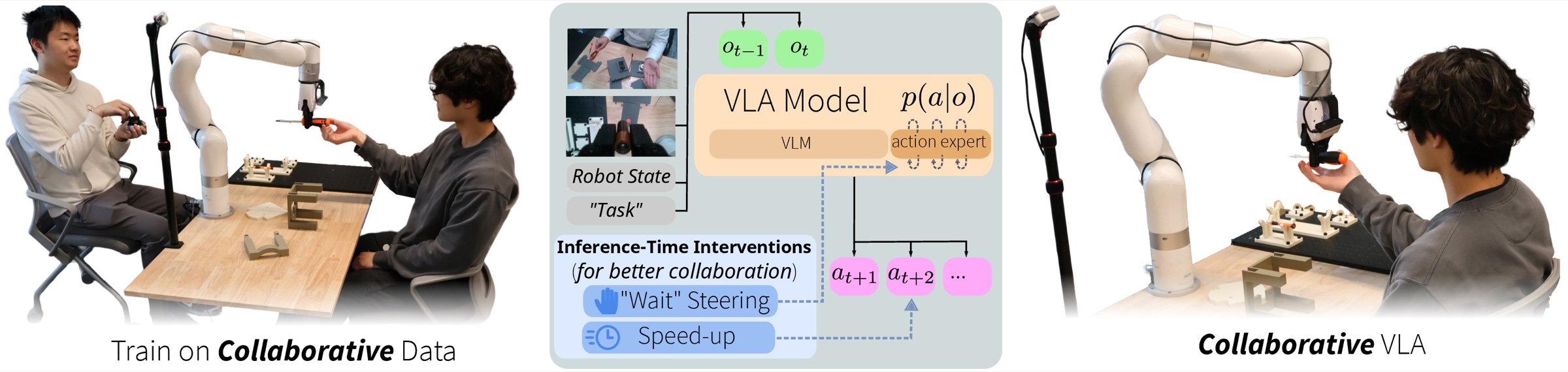
Human-robot collaboration (HRC) combines the complementary strengths of humans and robots to
improve task efficiency. However, many existing collaborative systems rely on hand-engineered
pipelines, limiting their scalability and flexibility for new tasks. In this work, we show that
models trained end-to-end with imitation learning, specifically vision-language-action (VLA)
models, can support collaborative manipulation, and characterize the key factors affecting their
real-world performance.
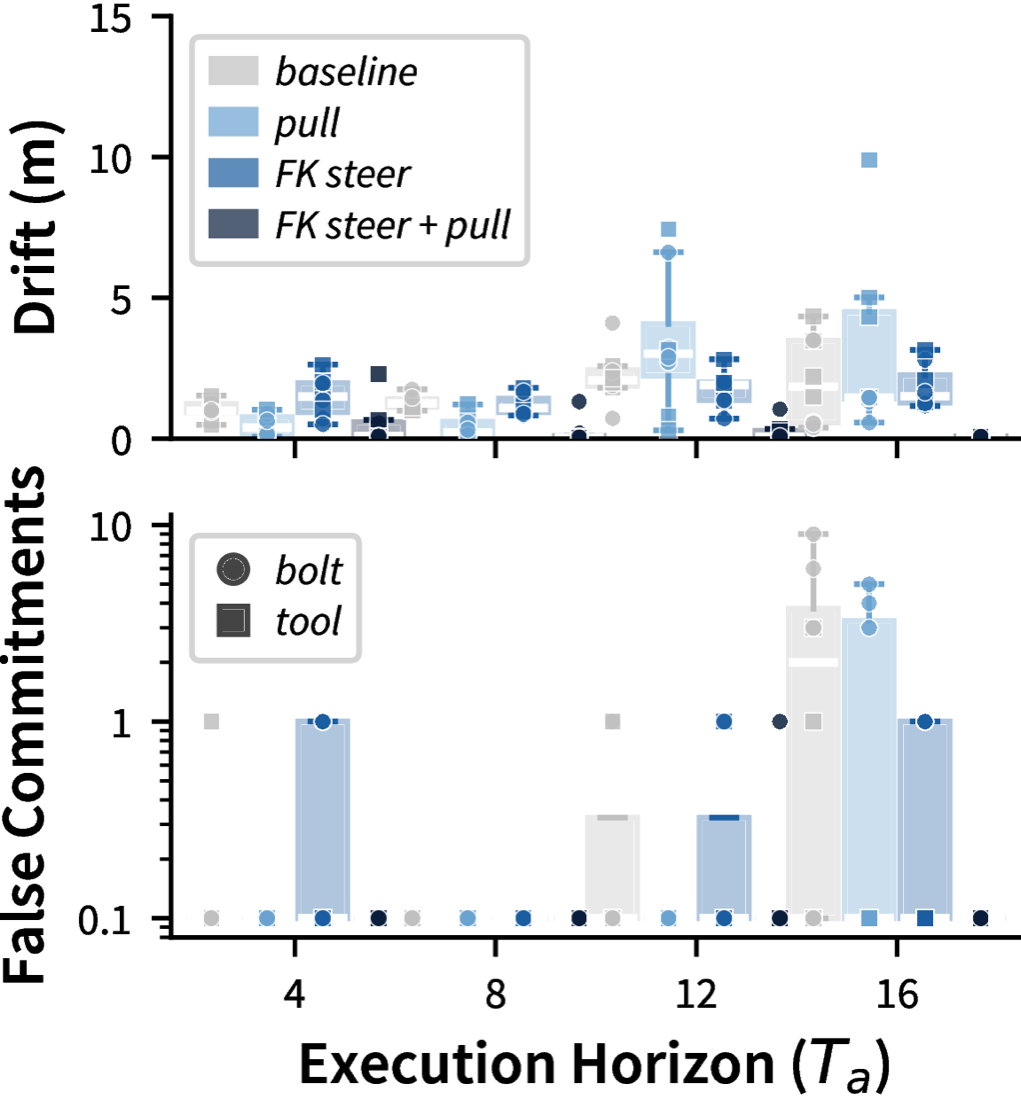
We evaluate two state-of-the-art models and identify a failure mode of action-chunking policies in
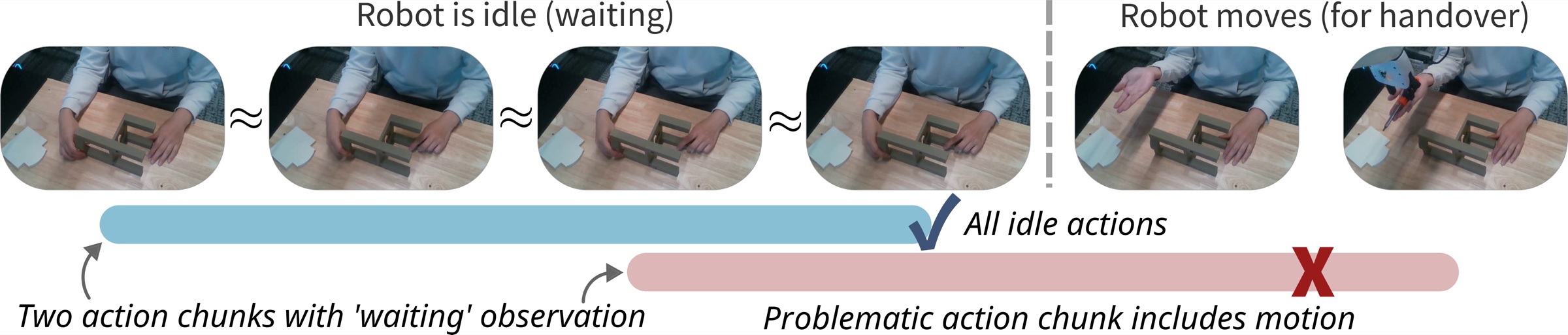
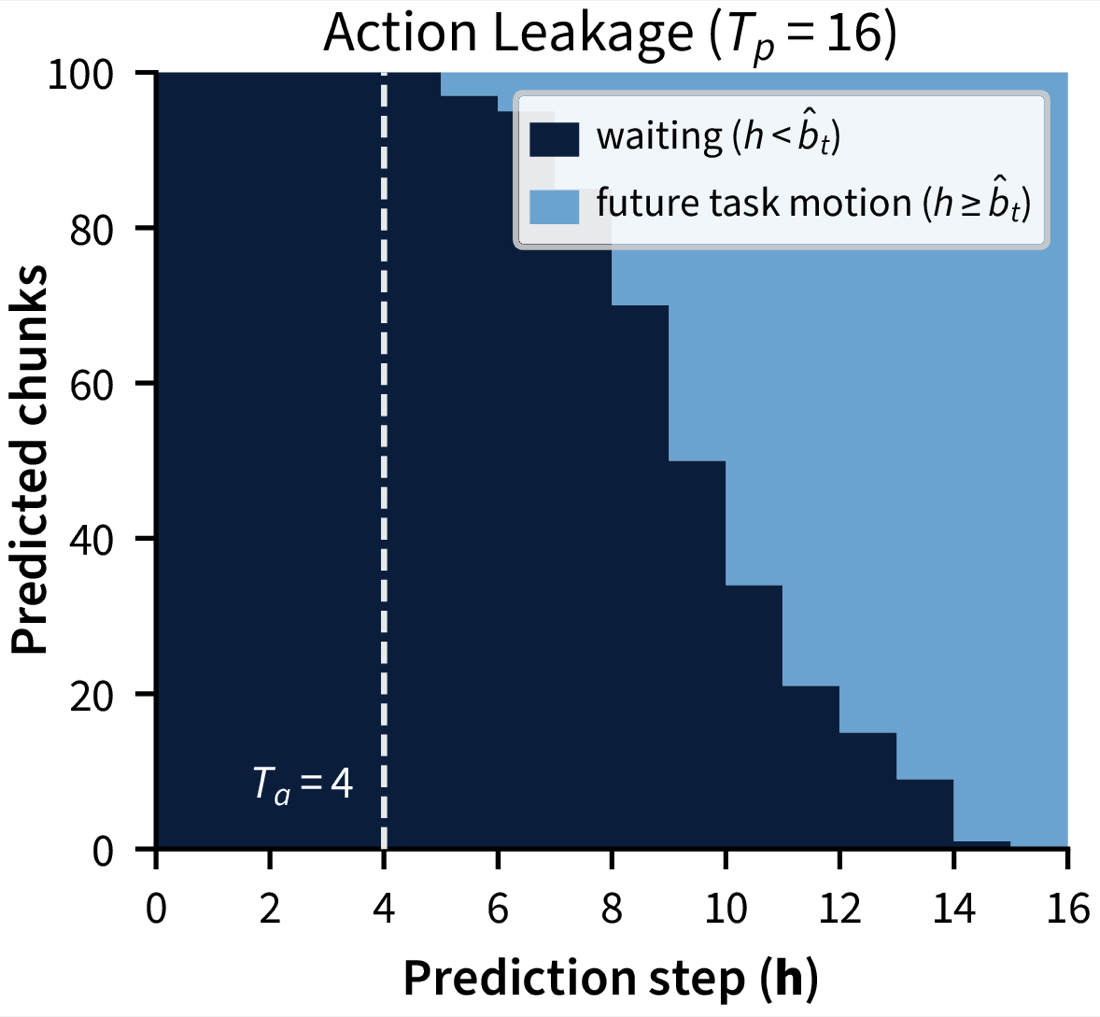
implicit HRC, where demonstration action leakage (i.e., action chunks crossing latent task
transitions) can cause premature assistive behavior. We find that this issue increases with longer
execution horizons and occurs in real-world collaborative VLA systems, such as when a robot attempts
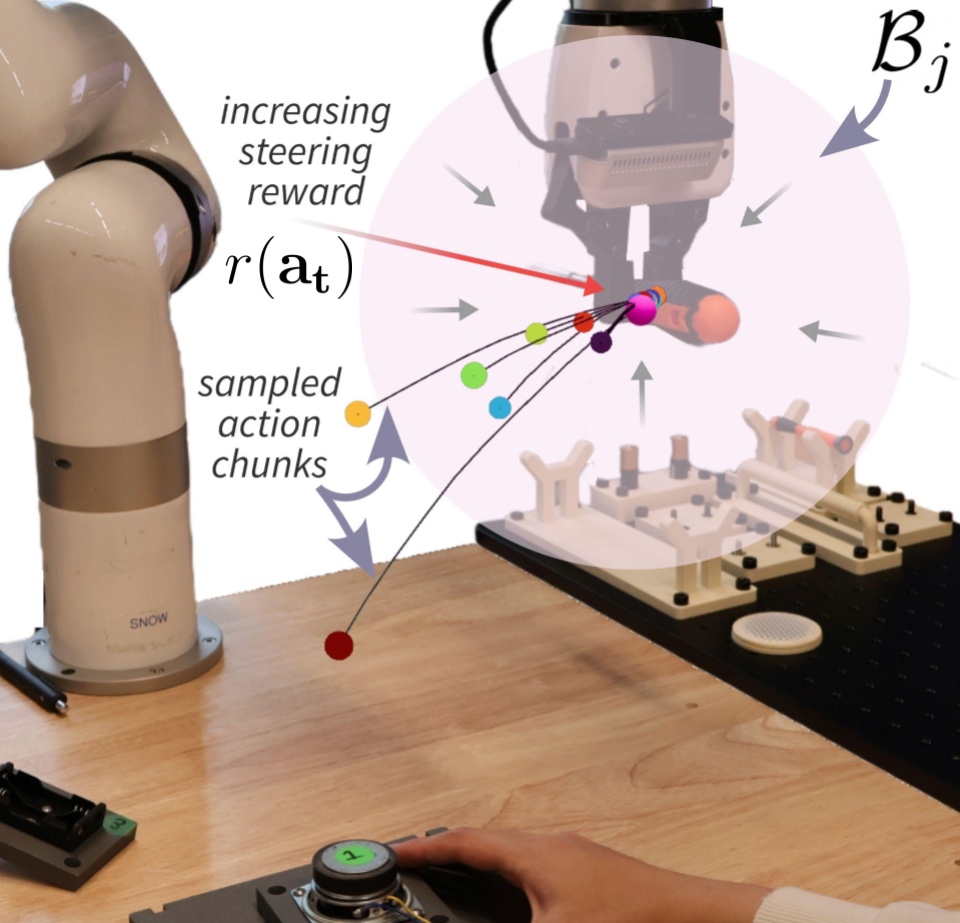
to hand over a tool before the person is ready. We propose an inference-time steering method to
mitigate these erroneous assistive actions while preserving policy performance.
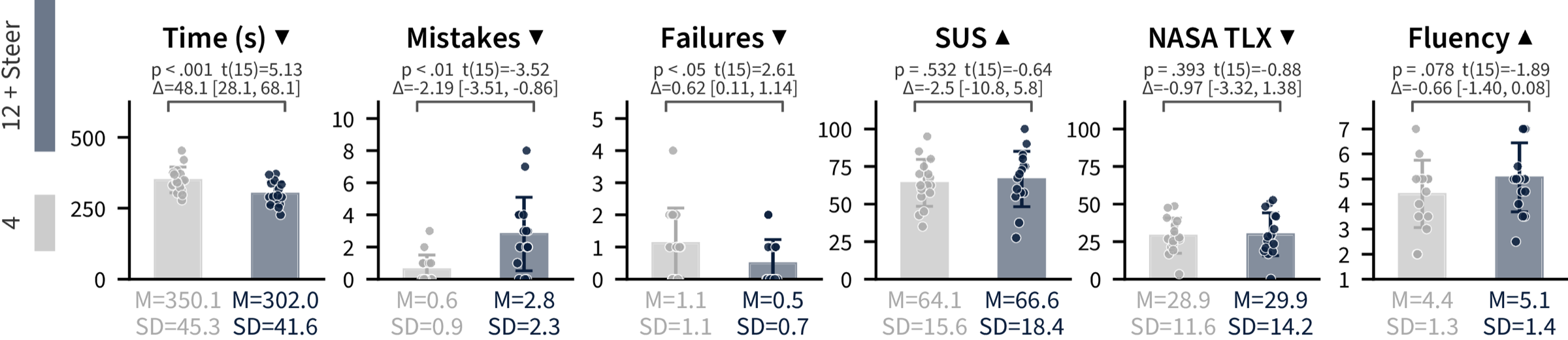
Finally, through a 16-participant user study on a long-horizon collaborative assembly task, we show
that steering enables a longer execution horizon while mitigating premature assistance, leading to
faster collaboration and fewer failures compared to a shorter-horizon policy.